Posts

Showing posts with the label economics

The Four Core Principles of Economics: A Tale of the Kingdom of Prosperon

Image
In the grand Kingdom of Prosperon , King Theodric sat on his golden throne, troubled. His kingdom was thriving, yet the royal treasury was depleting fast. The people were working hard, but their choices often led to waste and inefficiency. Seeking wisdom, he summoned four legendary scholars , each a master of an economic principle. These scholars would guide the king in making smarter decisions for his realm. 1. The Cost-Benefit Principle: The Festival Dilemma The first scholar, Lady Emilia , stepped forward. She was known for her sharp mind and logical thinking. "Your Majesty," she began, "before making any decision, you must weigh the benefits against the costs." To illustrate, she told a story: The king had two choices : Host a grand festival to celebrate Prosperon’s 100th year, which would cost 1,000 gold coins but attract merchants and travelers , increasing trade revenue. Invest the 1,000 gold in roads and bridges , which would boost trade permanently but ...

The Tale of the Farmer and the Merchant: The Absolute Income Hypothesis

Image
In the bustling town of Goldshire , two friends, Theo the Farmer and Marcus the Merchant , lived very different lives. Theo owned a small wheat farm on the outskirts of the town. His income was steady but modest —each season, he sold his crops at the market and earned just enough to feed his family, buy essential supplies, and save a few gold coins for emergencies. Marcus, on the other hand, ran a thriving trade business . He imported silk, spices, and rare gemstones from distant lands, making large profits with each transaction. With his wealth, he dined at the finest inns, bought luxurious clothes, and even expanded his business. The Absolute Income Hypothesis in Action One day, an economist named Sir Keynes visited Goldshire and observed how its people spent money. He noticed an important pattern: Theo, the Farmer, spent most of his small income on necessities. Since he earned less, he could only afford to buy food, basic clothing, and tools for his farm. He saved very little. ...

The Tale of Two Indexes: CPI and WPI

Image
In the bustling kingdom of Econland , two powerful advisors helped the king track the rising and falling costs of goods: Sir CPI (Consumer Price Index) and Lord WPI (Wholesale Price Index) . The king, worried about inflation affecting his subjects and traders, often turned to these two advisors to understand the kingdom’s economy. However, while both measured inflation, their approaches were vastly different. Chapter 1: The People's Guardian – Sir CPI Sir CPI was tasked with keeping an eye on the common people —the farmers, merchants, blacksmiths, and tailors—who bought goods for daily use. He rode through the streets, visiting homes, markets, and shops, tracking the prices of essential goods and services that people used every day: ✅ Food & Beverages – Fruits, vegetables, milk, bread ✅ Housing – Rent for homes ✅ Clothing & Footwear – Woolen coats, silk robes ✅ Healthcare – Medicines, doctor visits ✅ Transportation – Carriages, horses, oil for lamps Formula for CPI: ...

Game Theory: The Battle of the Two Businesses

Image
In the bustling city of Stratoville, two rival coffee chains— BrewMaster and JavaKing —competed fiercely for market dominance. Each company had to decide whether to launch a new premium coffee blend or stick to their current menu. But here was the catch: the success of their decision depended on what the other company did. The Decision Dilemma One morning, BrewMaster’s CEO, Lisa, gathered her executives. "If we launch the premium blend and JavaKing doesn’t, we capture the high-end market!" she said excitedly. "But if they launch too, we split the customers and waste resources." Across town, JavaKing’s CEO, Mark, was having the same discussion. "If neither of us launches, we save costs but miss potential profits. If we both launch, we compete head-to-head." The dilemma was clear—it was a classic case of game theory in action! The Payoff Matrix The choices led to four possible outcomes: BrewMaster / JavaKing Launch Don’t Launch Launch Both compete, profit...

Exchange Rates & Trade Balance: The Elasticities Approach – A Strategic Game of Global Trade

Image
In the bustling global economy, two rival nations, Econland and Tradeora , found themselves locked in a strategic economic battle. Their central banks and businesses closely monitored exchange rates and their impact on the trade balance —the difference between a country's exports and imports. One day, both nations faced a crisis. Econland’s currency depreciated , while Tradeora’s currency appreciated . Their finance ministers, Rajiv from Econland and William from Tradeora , had different views on how this shift would impact trade. Econland’s Currency Depreciation: The Export Boost? Econland’s currency, the EcoDollar (E$) , fell in value against Tradeora’s TradeCoin (T$) : 1 E $ = 2 T $ (Previous rate) 1 E\$ = 2 T\$ \quad \text{(Previous rate)} 1 E $ = 2.5 T $ (New rate) 1 E\$ = 2.5 T\$ \quad \text{(New rate)} Rajiv was optimistic. He believed depreciation would make Econland’s goods cheaper for Tradeora’s consumers , boosting exports. A laptop that previously cost 1,000 E$ ...

The Curious Case of the Price Index: How Leo Unlocked the Mystery of Rising Prices

Image
Leo was a sharp-minded entrepreneur who ran FreshMart , a successful chain of grocery stores in his city. Business had always been steady, but over the last year, something strange had happened. 🛒 His customers were complaining that prices were rising too fast. 📈 His suppliers had increased their rates , saying costs had gone up. 💰 But when he looked at his store’s earnings , they weren’t increasing as much. Leo couldn’t tell whether this was just a problem with his stores or something happening on a larger scale. If prices kept rising, customers might switch to competitors, and his profits would shrink. "I need to get to the bottom of this!" Leo thought. The Price Index Puzzle Leo decided to visit his old economics professor, Mr. Kapoor , for advice. "Professor, my customers say prices are rising. My suppliers are charging me more. But how do I know if this is just a local issue or something bigger?" Mr. Kapoor smiled. "That’s a great question, Leo. What ...

The Kingdom of Florentia: A Tale of Inflation, Deflation, Hyperinflation, and Disinflation

Image
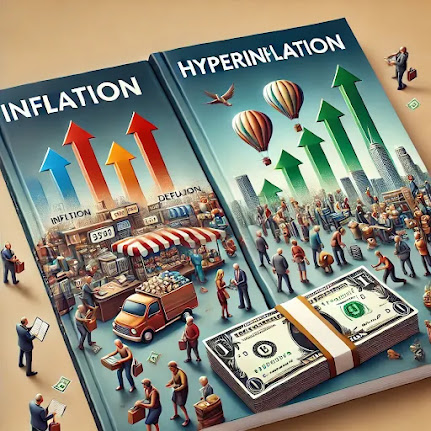
Once upon a time, in the prosperous Kingdom of Florentia, people thrived under a stable economy. Farmers grew wheat, merchants traded goods, and artisans crafted beautiful jewelry. But over the years, Florentia experienced strange economic shifts that changed the lives of its people. 📈 Inflation: The Rising Storm One year, King Eldric decided to build a grand palace and fund a war campaign. To finance this, he printed more gold coins and distributed them among citizens. At first, everyone felt rich —farmers could buy better tools, merchants sold goods quickly, and the kingdom seemed prosperous. However, something strange happened… Since everyone had more money, demand for goods increased. But there were not enough goods to match this demand! ⚠️ Prices started rising. Wheat, which used to cost 10 gold coins, now cost 15, then 20! The purchasing power of money declined. "This is called inflation," said the royal economist, Sir Harold. "When too much money chases ...

The Tale of Two Choices: Substitution and Income Effects

Image
Rahul and Aman were best friends, both working in the same office but with different lifestyles. Every morning, they grabbed a coffee on their way to work—Rahul always went for his favorite artisan latte (₹250), while Aman preferred a regular filter coffee (₹100). The Shock: A Price Hike! One day, the café raised the price of artisan lattes from ₹250 to ₹350. Rahul frowned. “That’s expensive!” he thought. This is where Substitution and Income Effects kicked in. 1. The Substitution Effect: Since the artisan latte became more expensive , Rahul started considering alternatives. Instead of spending ₹350 daily, he thought, "Maybe I’ll switch to a filter coffee like Aman—it’s much cheaper and still gives me my caffeine fix!" 🔹 Substitution Effect: When the price of a good increases, people look for cheaper alternatives (substitutes). 2. The Income Effect: Rahul also realized that his purchasing power had decreased —even though his salary was the same, he now had less money lef...